[ A BRIEF HISTORY OF ]
Winesgiving
My husband quizzed me on which grapes were in a Bordeaux blend on our second date. I let him teach me that it was Cabernet Sauvignon, Merlot, Cabernet Franc, Petit Verdot, Malbec, and the occasional Carménère - and then we made out in the parking lot.
It wasn’t about the wine. It was what the wine opened up - this window into his mind, the way he saw the world as something to be curious about. Climate and language and far-away places. And history, if you know what you’re tasting.
People who love wine will tell you the same thing. You’re not chasing a buzz. You’re chasing a place. A story. A moment you can actually taste.
Winesgiving wasn’t planned. Six years ago, I convinced my humble husband - who never volunteers to be the center of attention - to host a tasting for our friends.
He’s the kind of competent that makes everything look effortless. The quiet orchestrator who solves problems before you notice they exist. He doesn’t brag. He doesn’t need to. No spotlight, just a brain that runs circles around most people and never says a word about it.
So I nudged him into it (gently, I swear) and he agreed to host a tasting. That first year was nothing fancy. Just him, talking about wine the way he talks about anything he loves. Here’s what this is. Here’s where it comes from. Here’s why it matters.
Since then, Winesiving has been many things.
The second year, I got ambitious. Six courses, two full days of cooking. He walked everyone through each course with a pairing - how acidity lifts a tomato dish, how Sangiovese changes when you put it next to fat. It was the most structured year, the most exhausting, and maybe the most satisfying. I still get asked for my bolognese recipe.
The third year was Portugal. I wanted it to feel more open, so I drew a big map of Portuguese wine regions and placed bottles on their locations. Freedom to explore, I thought.
Our friends lasted about five minutes before someone asked, “Okay, but what do we do?”
We’d tried to create a choose-your-own-adventure. Turns out freedom is overrated. People wanted guidance. They want someone to say, “start here, try this, now taste that.” So we adjusted mid-evening and it turned into this sweet little mutiny where everyone just wanted him to tell them what to drink next.
Year four was chaos in the best way. A blind French wine tasting. Everyone brought a bottle, we split into teams, did a bracket-style tournament. The winner got bragging rights and nothing else, but you’d think we were competing for a trip to Paris.
Year five I was eight months pregnant, which meant everything needed to be slower, calmer, and deeply comfortable. Washington felt right. Home. Familiar landscapes.
We partnered with Belle & Bottle, lined the long table with cheeses, figs, olives, and all the accoutrements. Shaun led a proper tasting. It was the most grounded year. People lingered longer, listened more closely. Maybe it was the season we were in. Maybe it was the wines. Both, probably.
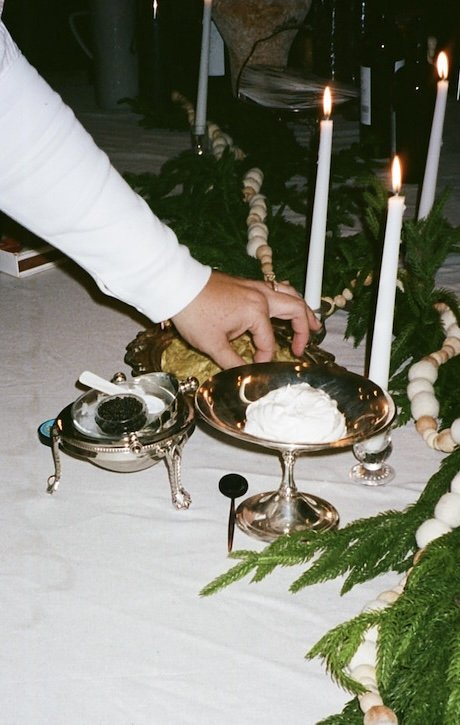
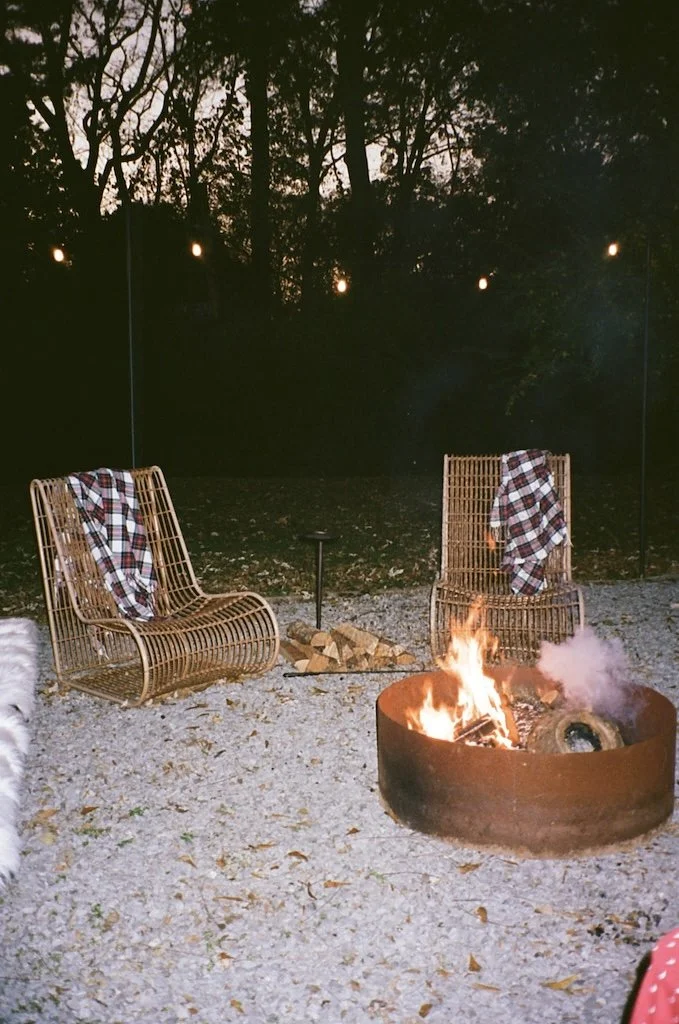
This year, we went Alpine. High elevation wines from France, Italy, and Switzerland - light, low-alcohol reds and mineral-driven whites shaped by altitude and stone. Wines from Savoie, Trentino, Alto Adige, Valle d’Aosta. Literally grown uphill.
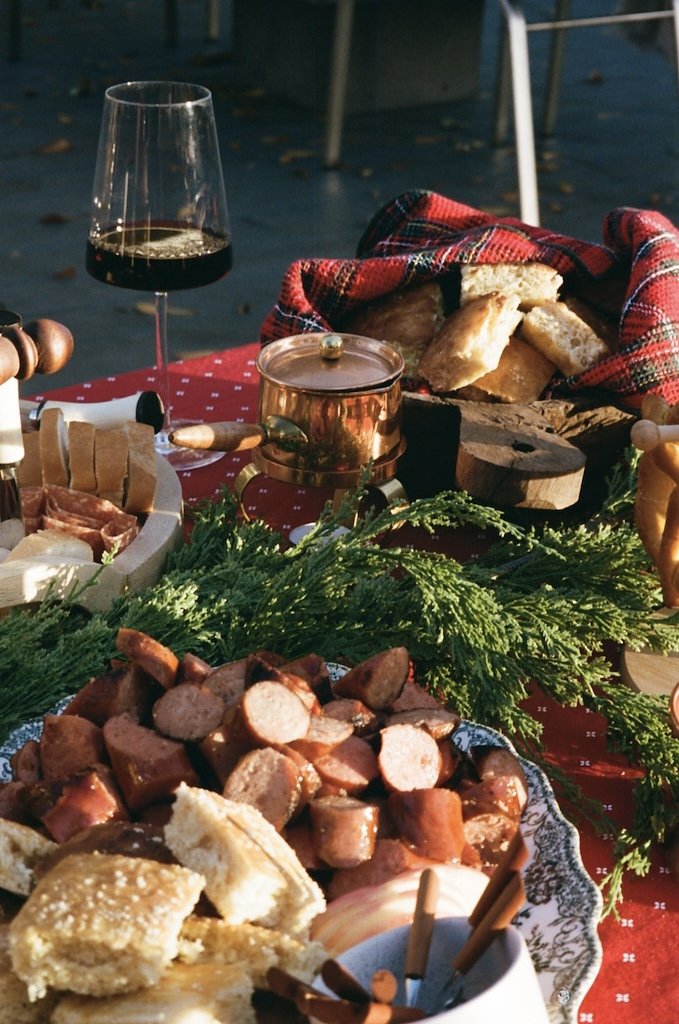
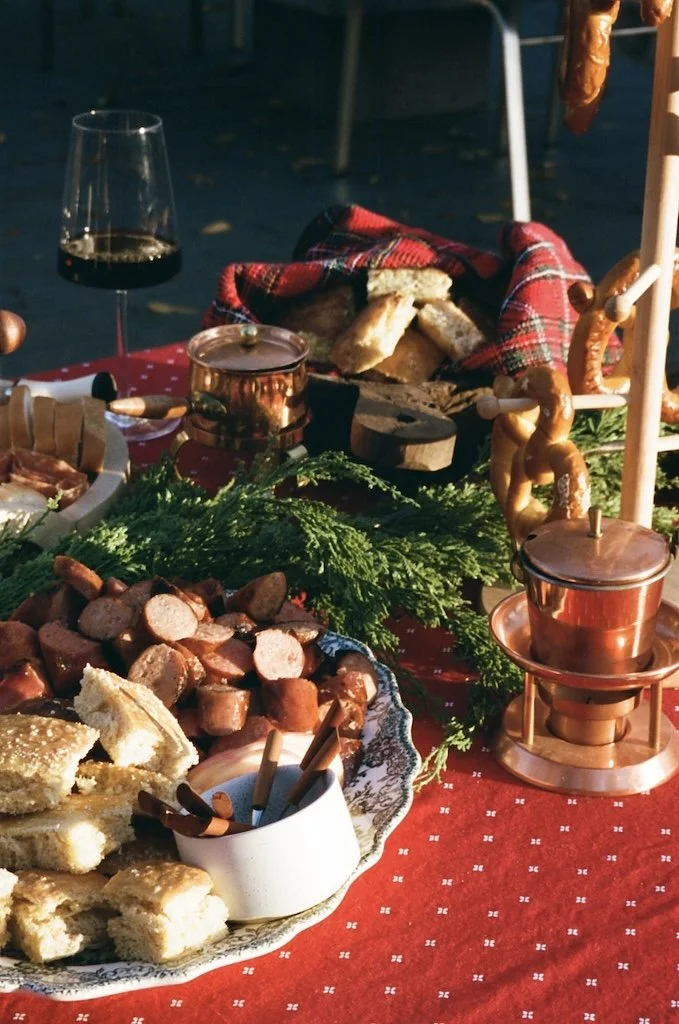
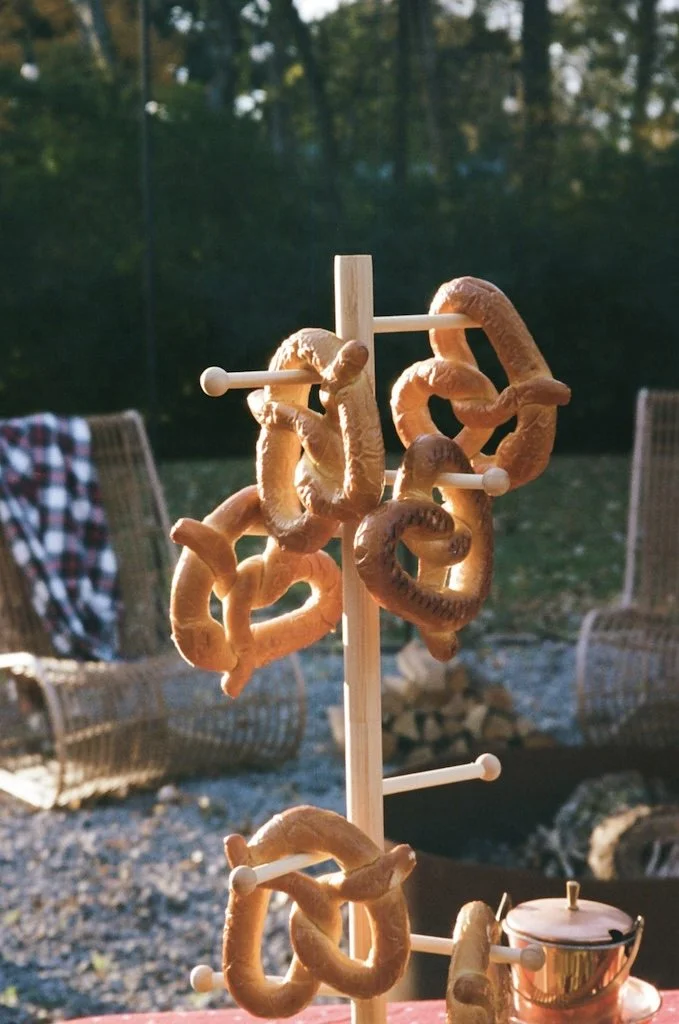
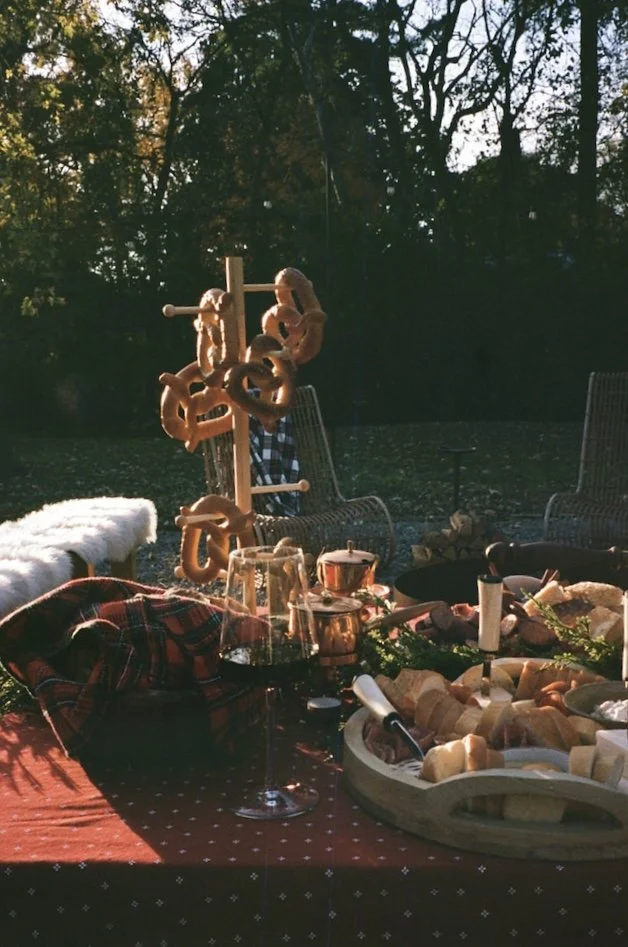
I made fondue, pretzel focaccia, sausages, apples. The kind of food that makes you want to wrap yourself in a blanket and settle in for the long haul.
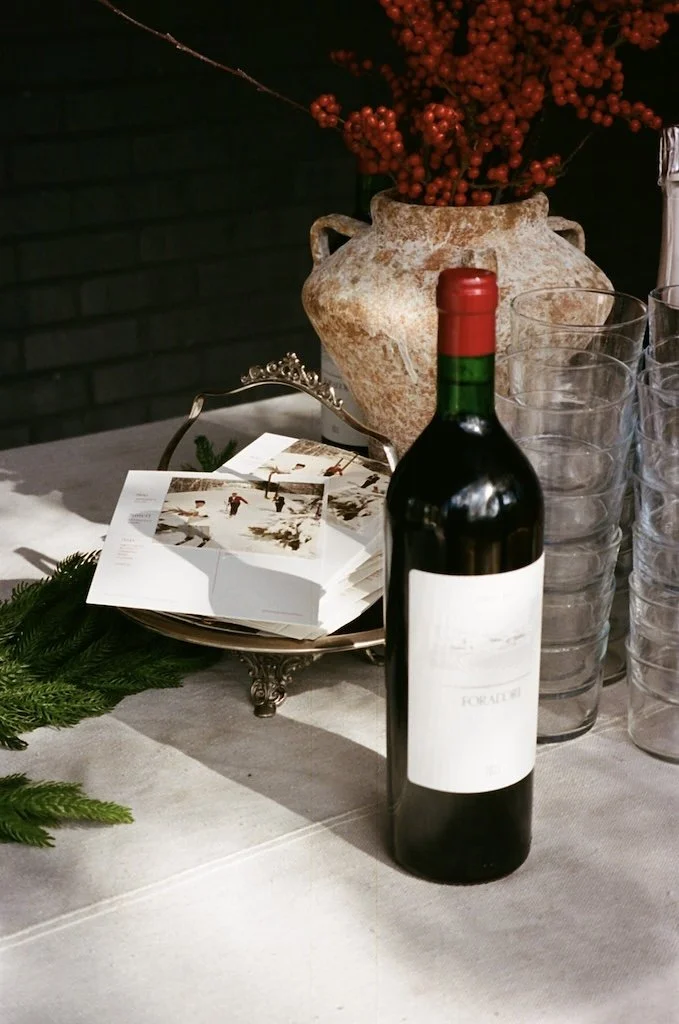
We’re lucky to have Carmen in our orbit - she picked the wines for us this year, and they were perfect. A sparkling Molette and Altesse blend from Savoie, produced the traditional Champagne way. A Prié Blanc from Valle d’Aosta, grown in one of Europe’s highest vineyards, just minutes from Mont Blanc’s summit. A Kerner from an 800-year-old monastery in the Dolomites that’s been making wine since the 12th century. And a structured Teroldego from Trentino that held its own next to the lighter mountain reds - Poulsard and Schiava - that filled the rest of the table.
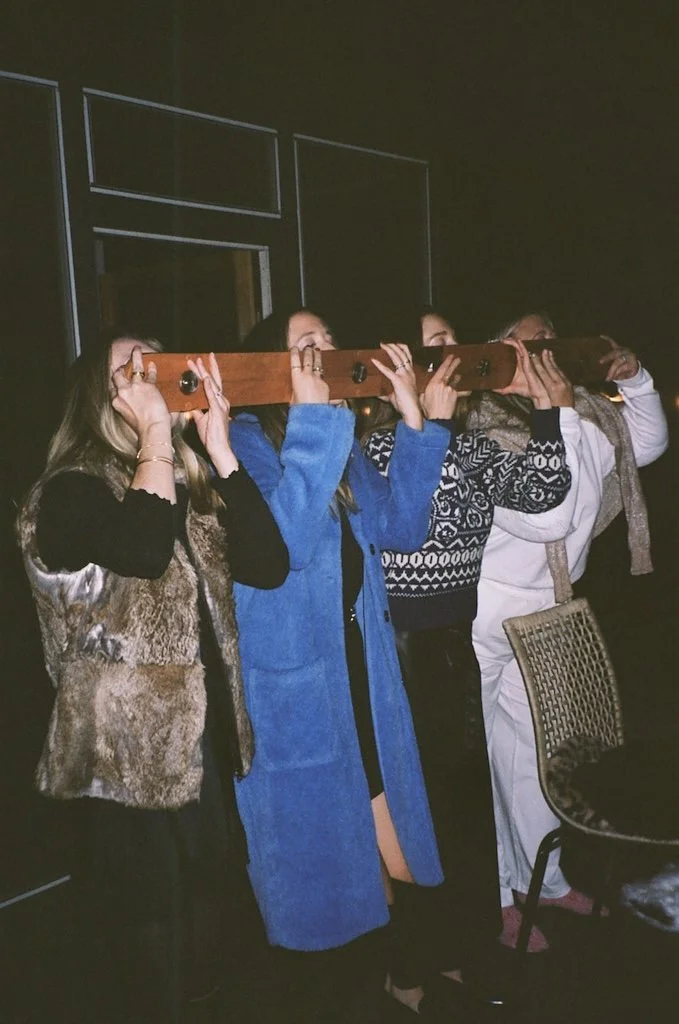
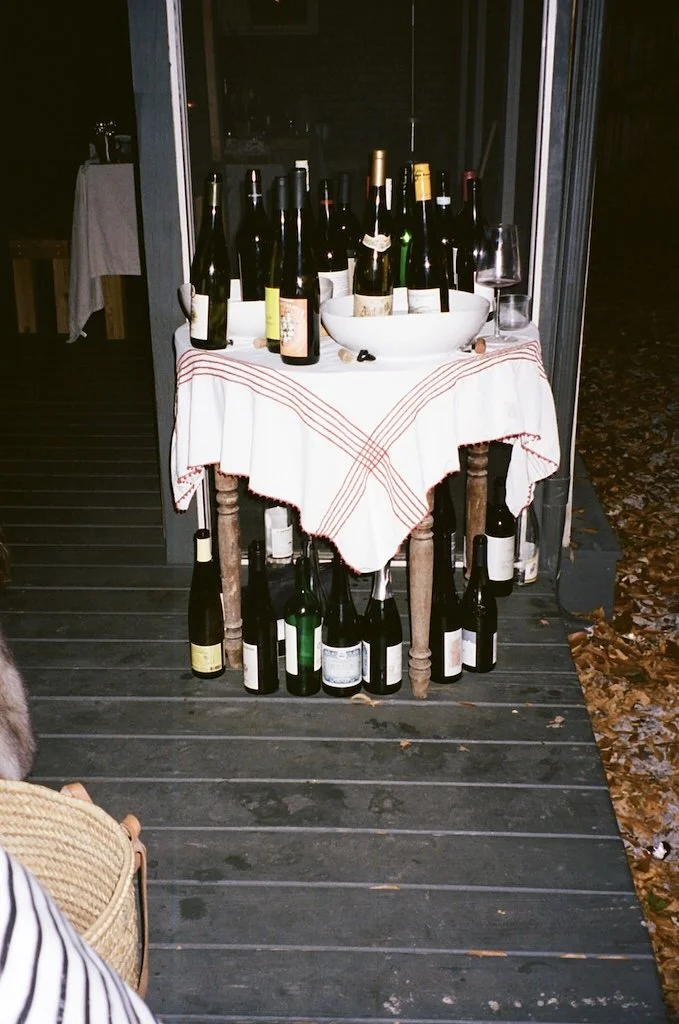
We also asked everyone to bring a bottle from the region, which... was overzealous. But it meant the table was crowded with Alpine wines, and the night felt like a group effort.
Turns out, winesgiving isn’t about wine (although, it is, a little bit). It’s about creating a reason to pause, to pay attention, to sit with people you love and taste something together.
The format changes. The focus shifts. Some years are structured, some are loose. Some are educational, some are just fun.
My husband still explains things like he’s sharing a fun secret, not teaching a class. People still ask questions they’d never ask at a restaurant or bar.
It’s never been about the wine.
It’s about making space for curiosity. For flavor. For the kind of evening that unfolds at its own pace and leaves you feeling like you learned something - about grapes, about places, about the people sitting next to you.
If you want to start your own version, don’t overthink it. Pick a theme, pour some bottles, feed people. The ritual is the whole point. The rest just fills in around it.
THE LINE UP
Lambert de Seyssel (Savoie, France)
Ermes Pavese, Blanc de Morgex et de La Salle (Valle d’Aosta, Italy)
Abbazia di Novacella Kerner (Alto Adige, Italy)
Foradori Teroldego (Trentino, Italy)
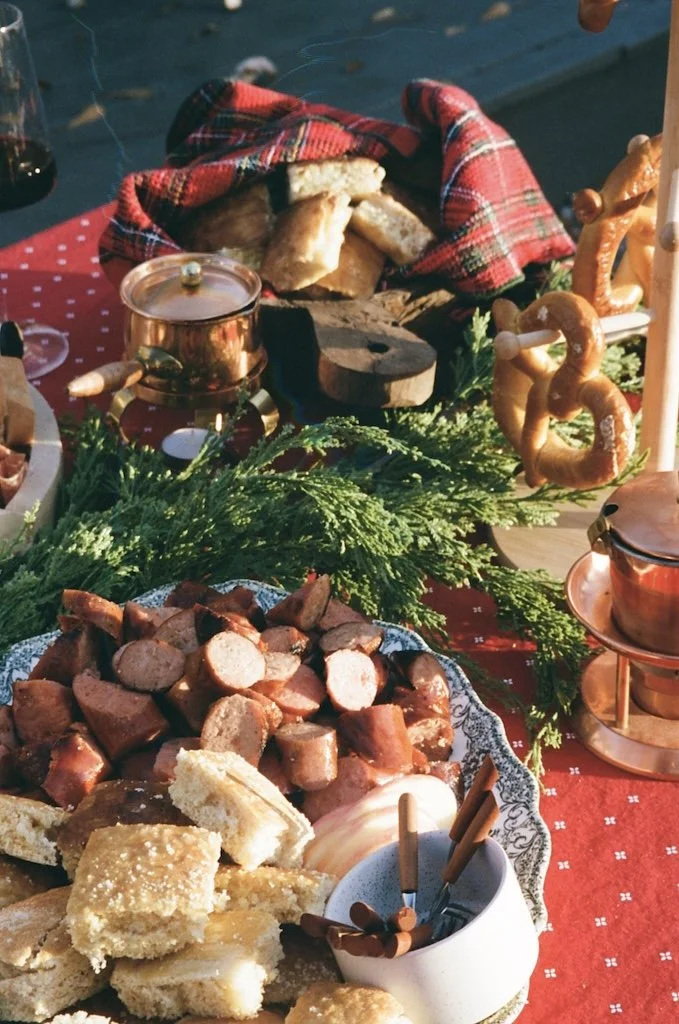
Pretzel Focaccia
1 3/4 cups plus 3 tablespoons warm water
One 1/4-ounce package active dry yeast (2 1/4 teaspoons)
4 teaspoons sugar
5 1/4 cups all-purpose flour, plus more as needed (see Cook’s Note)
2 1/2 teaspoons kosher salt
3/4 cup plus 2 tablespoons extra-virgin olive oil, plus more for the bowl
1 tablespoon baking soda
Pretzel salt, for sprinkling
For the pretzel focaccia: Combine 1 3/4 cups of the warm water, the yeast and sugar in a medium bowl and stir to dissolve the sugar. Set aside until the yeast is bubbling and very foamy, 10 to 15 minutes.
In the bowl of a stand mixer fitted with a dough hook, combine the flour, kosher salt, 1/2 cup of the olive oil and the yeast mixture. Mix on low speed until just combined. Once the dough comes together, increase the speed to medium-high and continue to knead until the dough is smooth and stretchy, 5 to 6 minutes. Add a good pinch of flour if the dough is really sticky and tacky, then mix again until well combined (do not add more than 2 tablespoons additional flour or your bread may be dry).
Coat the inside of a large bowl lightly with olive oil and add the dough. Turn the dough once or twice to coat it in oil. Cover and set in a warm place until the dough has doubled in size, about 1 hour.
Coat a rimmed 18-by-13-inch baking sheet with 1/4 cup of the remaining olive oil. Stir the remaining 3 tablespoons warm water, 2 tablespoons olive oil and the baking soda together.
Scrape the proofed dough onto the prepared baking sheet and begin pressing it out to fit the size of the pan. Brush the baking soda mixture all over the dough (it’s okay if some drips off the sides of the dough and onto the baking sheet). Use your fingertips to make dimples over the surface of the dough, pressingly firmly but not so hard that you make holes through the dough. Sprinkle the dough with pretzel salt.
Cover the baking sheet with another inverted rimmed baking sheet or with plastic wrap sprayed with nonstick spray and place in a warm place until it has doubled in size, about 45 minutes.
Preheat the oven to 425 degrees F.
Bake until the top of the loaf is deep golden brown and the focaccia is just cooked through, 15 to 20 minutes. Remove it from the oven and let it cool slightly, about 15 minutes. Transfer the focaccia from the baking sheet to a wire rack to cool completely.