
SS:05
The Levant spans the Eastern Mediterranean coast - including Lebanon, Syria, Jordan, Palestine, and Israel. Inspired by the culinary traditions of the Eastern Mediterranean, this menu uses fresh herbs, tangy labneh, freekeh, pistachios, pomegranate molasses, stone fruit, and citrus to celebrate a cuisine shaped by centuries of exchange across the region. Great for a late summer gathering with natural orange wine.
Grilled Man'oushe Flatbread with Blistered Grapes & Labneh
Mint and Pistachio Whipped Feta
Freekeh Pilaf with Sour Cherries, Crispy Shallots & Mint
Roasted Potato Salad with Burnt Lemon, Mint, Pistachios & Fried Capers
Lamb Backstrap with Tzatziki, Pistachio, Herb Gremolata & Aged Pomegranate Molasses
Mascarpone-Stuffed Poached Apricots with Orange Blossom and Toasted Almonds
& Orange Wine by Wining with Carmen
FOR SIX
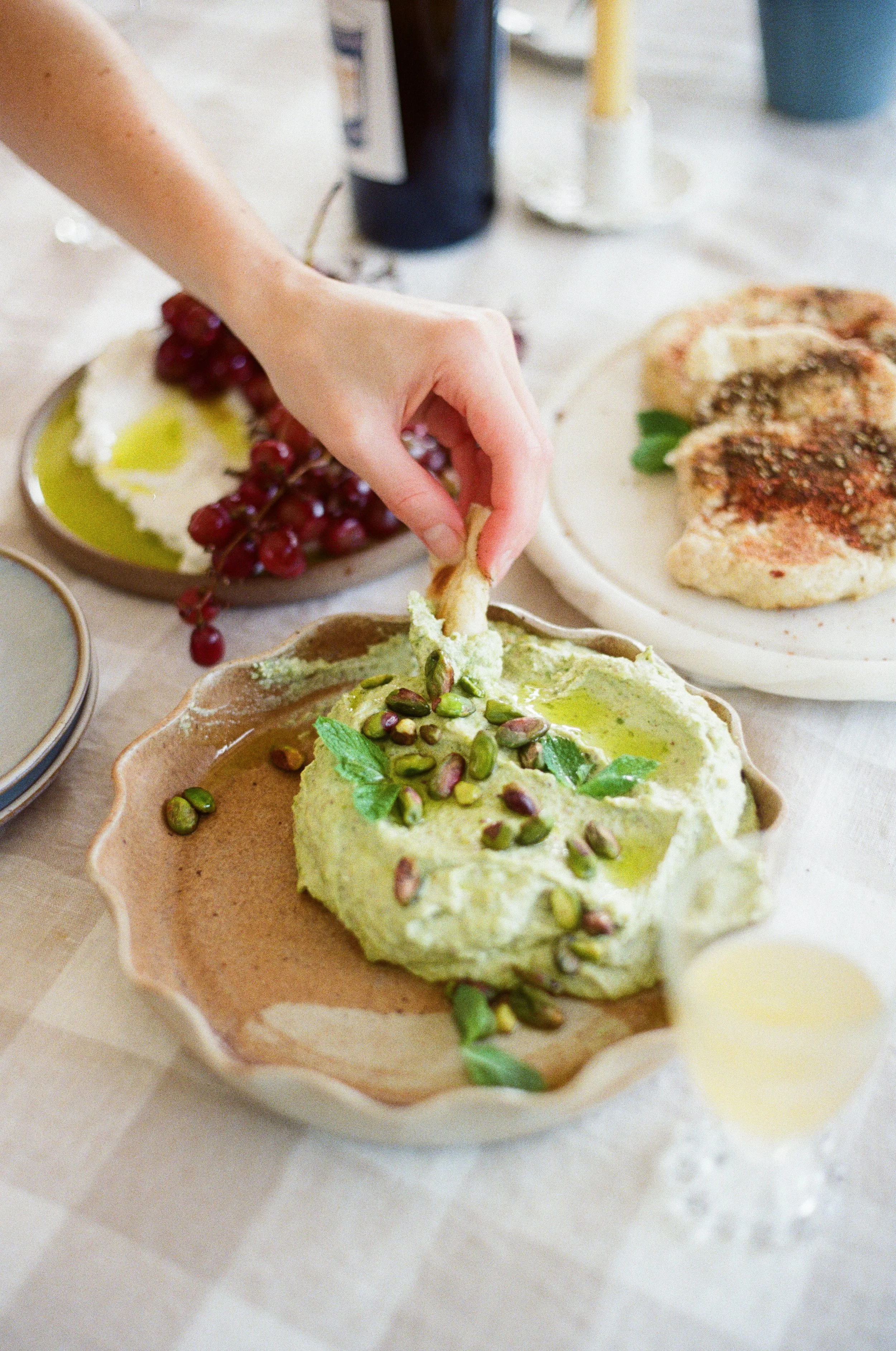
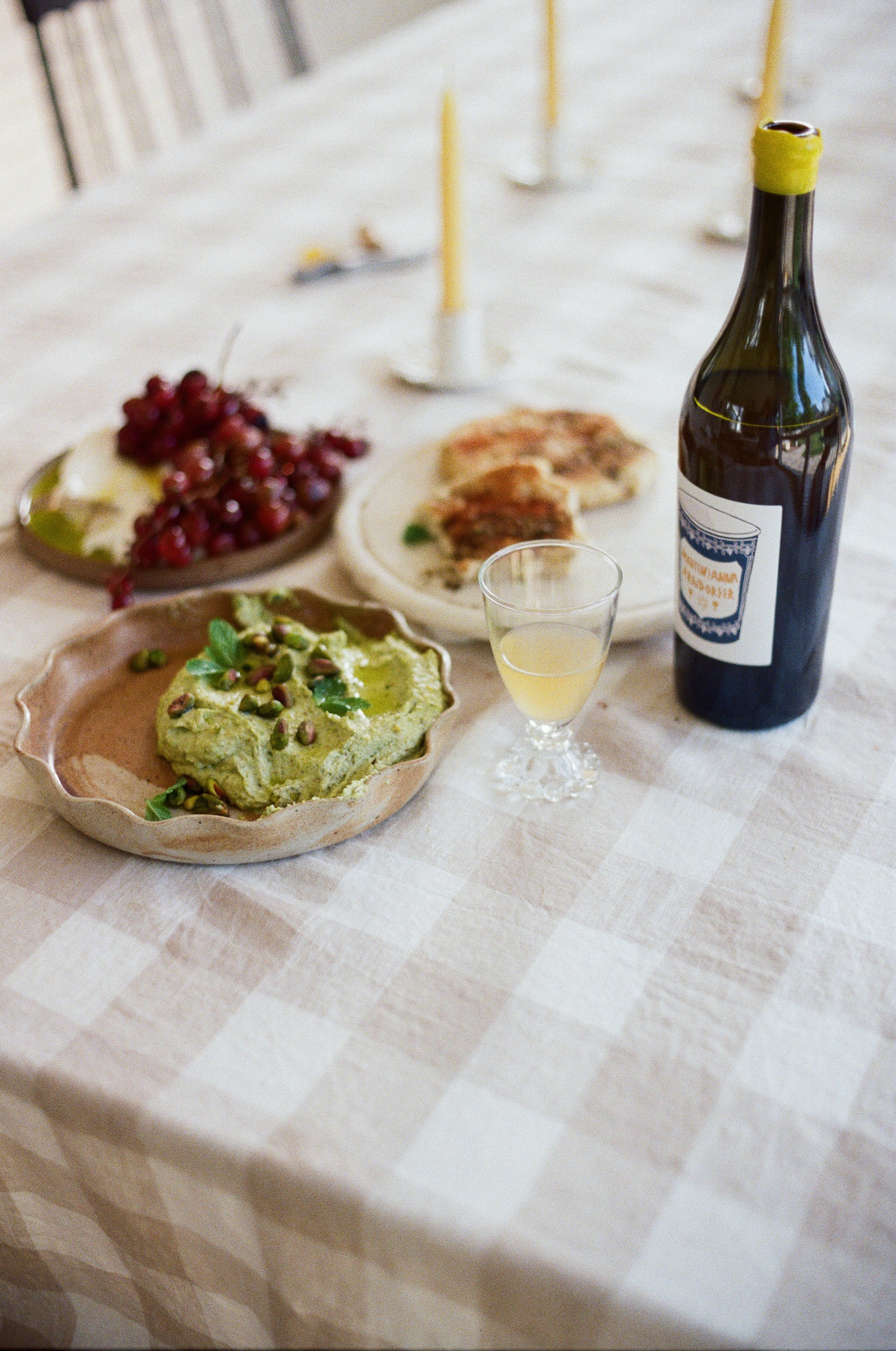
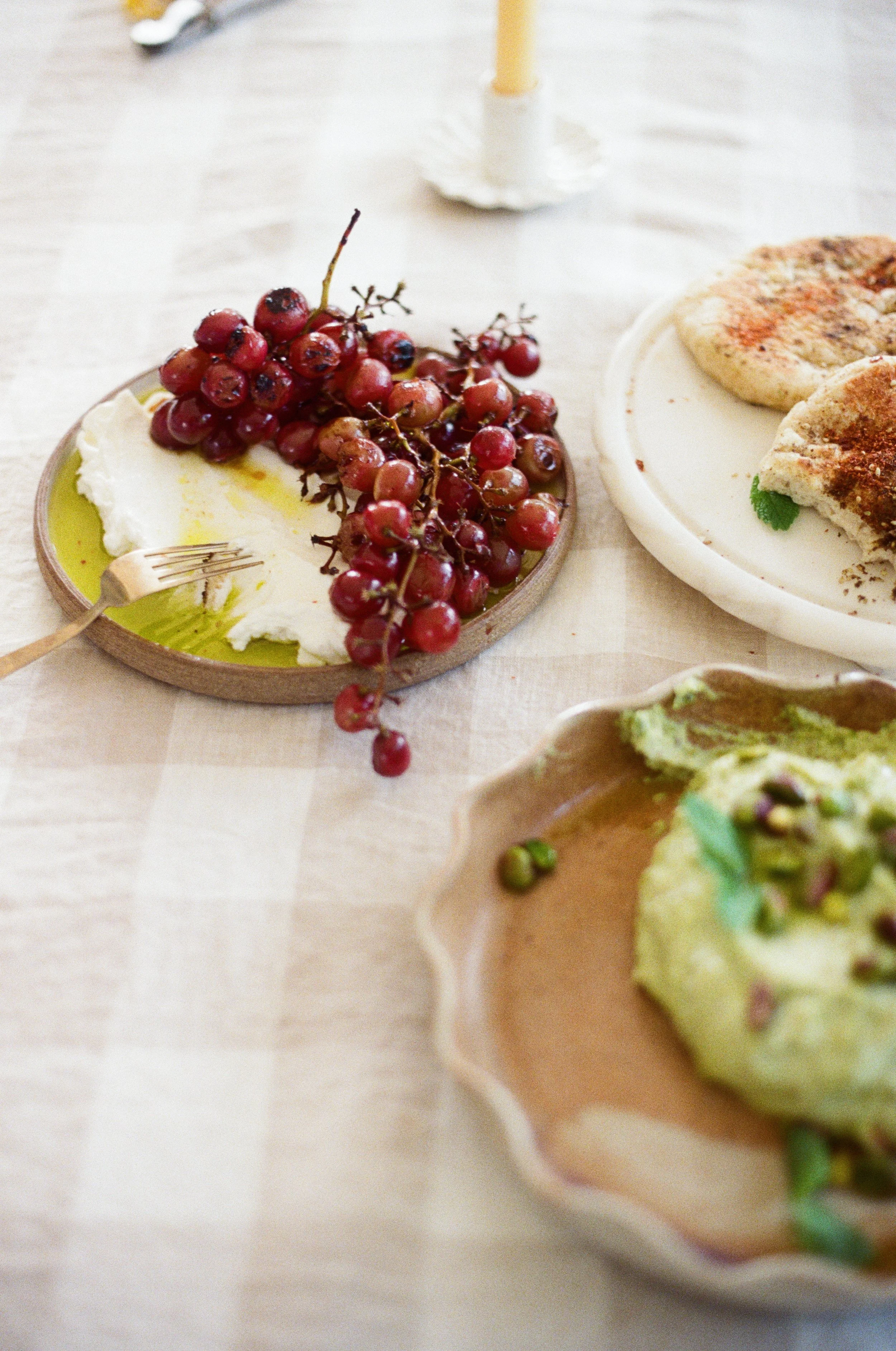
On Orange Wine
Orange wine is the oldest way wine was ever made - white grapes fermented with their skins on, the way red wine is made, which is why it comes out amber, tannic, and textured in a way.
The Levant and the Caucasus are where this method originates. Georgia has been making skin-contact wine in clay amphorae called qvevri for eight thousand years. The Eastern Mediterranean has always understood that wine should have grip and oxidative depth. Orange wine isn't just a pairing choice for this menu - it's native to the same culinary geography.
From Carmen about our pick: “Martin and Anna Arndorfer make some of Austria’s most exciting low-intervention wines. I picked up this exclusive-for-New York bottle while I was at Karakterre in NYC last year. The name Gerne refers to the Austrian terms for “my pleasure,” a phrase used in their hospitality industry. The label’s nod to iconic "We Are Happy To Serve You" paper coffee cups reinforces this message.
The perfect bottle for a Dovetail meal, where we gather around the table taking care of one another: handmade pitas, herbs ripped from the garden, refilling your neighbor’s glass. There’s a genuine pleasure in the service.
The wine: A blend of Grüner Veltliner, Riesling, Neuburger, and Sauvignon Blanc, made through a combination of co-fermentation and skin-contact winemaking. Built for fresh and complex flavors.”
Grilled Man'oushe-Inspired Flatbread with Blistered Grapes, Labneh & Nigella
For the Flatbread
1 cup warm water
2¼ teaspoons active dry yeast
2½ cups all-purpose flour
1½ teaspoons kosher salt
1 tablespoon extra virgin olive oil
For the Toppings
2 clusters of seedless red or black grapes
Extra virgin olive oil
1¼ cups labneh
1 garlic clove, finely grated
Zest and juice of 1 lemon
3 tablespoons za'atar
1 tablespoon nigella seeds
Leaves from 4 sprigs fresh thyme
2 tablespoons honey
Flaky sea salt and freshly cracked black pepper
Chopped flat-leaf parsley, optional
In a large bowl, combine the warm water and yeast. Let stand 5 to 10 minutes until foamy. Add the flour, salt, and olive oil and mix until a shaggy dough forms. Turn out and knead for 8 to 10 minutes until smooth and elastic. Transfer to a lightly oiled bowl, cover, and let rise about 1 hour until doubled.
Heat the oven to 450°F or fire up the blackstone. Toss the grapes with a drizzle of olive oil and a pinch of flaky salt. Spread on a sheet pan and roast 12 to 15 minutes, until blistered and beginning to collapse. For a smokier result, char them in a dry cast iron skillet over high heat instead.
Punch down the dough and divide into 8 equal portions. Shape into balls, cover, and rest 20 minutes. Roll each into a thin round on a lightly floured surface.
Whisk together the labneh, garlic, lemon zest, lemon juice, and a drizzle of olive oil. Season lightly with salt.
Heat a lightly oiled cast iron skillet over medium-high. Cook each flatbread 1 to 2 minutes per side until puffed, charred in spots, and cooked through.
Spread each warm flatbread generously with lemon labneh. Top with blistered grapes and their juices. Finish with za'atar, nigella seeds, thyme leaves, a drizzle of honey, flaky salt, and black pepper. Scatter parsley over if using.
Serve immediately.
Freekeh Pilaf with Sour Cherries, Crispy Shallots & Mint
2½ cups cracked freekeh
5 cups vegetable or chicken stock
3 tablespoons olive oil
4 shallots, thinly sliced
1 teaspoon cumin seeds
1 teaspoon coriander seed, lightly crushed
½ teaspoon cinnamon
¾ cup dried sour cherries
Zest of 1 lemon
1 cup fresh mint leaves
½ cup flat-leaf parsley, roughly chopped
½ cup pistachios, toasted and crushed
Flaky salt and black pepper
Heat 2 tablespoons olive oil in a saucepan over medium heat. Add cumin, coriander, and cinnamon and toast until fragrant.
Stir in freekeh and coat well in the spices. Add stock and a generous pinch of salt. Bring to a simmer, cover, and cook 20–25 minutes until tender but still pleasantly chewy.
Meanwhile, heat remaining olive oil in a skillet (or blackstone) and fry shallots until deeply golden and crisp. Drain on paper towels and season lightly with salt.
Fold sour cherries, lemon zest, mint, parsley, and half the pistachios into the warm freekeh.
Spoon onto a large platter and top with crispy shallots, remaining pistachios, extra mint, olive oil, and black pepper.
Roasted Potato Salad with Burnt Lemon, Mint, Pistachios & Fried Capers
Potatoes
2 lbs fingerling or heirloom potatoes, scrubbed and halved
3 tablespoons extra virgin olive oil
Flaky sea salt and freshly cracked black pepper
Burnt Lemon Dressing
3 lemons, halved
1 small garlic clove, finely grated
1 teaspoon honey
1 teaspoon Dijon mustard
4 tablespoons extra virgin olive oil
Salt and pepper
To Finish
3 tablespoons capers, thoroughly dried
Neutral oil, for frying
½ cup fresh mint leaves
3 green onions, thinly sliced
Small handful pistachios, lightly crushed
Flaky sea salt
Preheat the oven to 425°F. Toss the potatoes with olive oil, flaky salt, and black pepper. Spread cut-side down on a sheet pan and roast 35 to 40 minutes, until deeply golden and crisp at the edges. Set aside to cool slightly.
While the potatoes roast, place the lemon halves cut-side down in a dry cast iron skillet (or blackstone) over high heat. Press them flat and leave undisturbed for 4 to 5 minutes until deeply charred and caramelized. Remove and let cool. Squeeze the juice into a bowl, straining out any seeds or char. Whisk in the garlic, honey, mustard, and olive oil until emulsified. Taste — if the char has made it bitter, add a squeeze of fresh lemon juice to balance. Season with salt and pepper.
Pat the capers completely dry with paper towels — any moisture will cause them to spit. Heat a thin layer of neutral oil in a small skillet over medium-high. Add the capers and fry undisturbed for 2 to 3 minutes until opened and crisp. Transfer to a paper towel-lined plate.
Arrange the warm potatoes on a platter. Drizzle generously with the burnt lemon dressing. Scatter the mint, green onions, and pistachios over the top. Finish with the fried capers and a pinch of flaky salt.
Serve warm or at room temperature.
Lamb Backstrap with Tzatziki, Pistachio, Herb Gremolata & Aged Pomegranate Molasses
Lamb
3–3½ lbs lamb backstrap or lamb loin
2 tablespoons extra virgin olive oil
1 teaspoon ground cumin
1 teaspoon Aleppo pepper
Flaky sea salt and freshly cracked black pepper
Tzatziki
2 cups full-fat Greek yogurt
1 cucumber, grated and squeezed thoroughly dry
1 garlic clove, finely grated
Juice of ½ lemon
1 tablespoon extra virgin olive oil
Salt
Pistachio & Herb Gremolata
¾ cup pistachios, toasted and roughly chopped
1 cup packed flat-leaf parsley leaves
½ cup packed fresh mint leaves
Zest of 1 lemon
1 small garlic clove, finely grated
2 tablespoons extra virgin olive oil, plus more as needed
To Finish
Aged pomegranate molasses
Flaky sea salt
Rub the lamb all over with olive oil, cumin, Aleppo pepper, salt, and black pepper. Let sit at room temperature for 30 minutes before cooking.
Combine the yogurt, cucumber, garlic, lemon juice, and olive oil in a bowl. Season with salt, stir well, and refrigerate until ready to serve.
Finely chop the parsley, mint, pistachios, garlic, and lemon zest together on a board until the mixture is cohesive but still has texture. Transfer to a bowl and stir in enough olive oil to make it just spoonable. Season with salt.
Heat a grill or cast iron skillet (or blackstone) over high heat until very hot. Sear the lamb 3 to 4 minutes per side until deeply caramelized on the outside and medium-rare within. Rest for 10 minutes before slicing against the grain.
Spread the tzatziki across a large platter. Arrange the sliced lamb over the top. Spoon the gremolata generously over the lamb and drizzle with pomegranate molasses. Finish with flaky salt and serve immediately.
Mascarpone-Stuffed Poached Apricots with Orange Blossom and Toasted Almonds
12 firm-ripe apricots, halved and pitted
2 cups water
1 cups dry white wine or dry rosé
0.5 cups sugar
2 tablespoons orange blossom water
1 strip of lemon peel
1 cups mascarpone
2 tablespoons honey
1 teaspoons orange blossom water (for filling)
1 zest of 1 orange
0.5 cups whole almonds, skin on
1 pinch flaky sea salt
1 fresh thyme or torn mint leaves, to finish
Make the poaching liquid: Combine 2 cups water, 1 cups dry white wine or dry rosé, 0.5 cups sugar, 2 tablespoons orange blossom water, and 1 strip of lemon peel in a wide saucepan over medium heat. Stir until the sugar dissolves, then bring to a gentle simmer.
Poach the apricots: Add the apricots cut-side up to the simmering liquid. Poach for 4 to 6 minutes 06:00 — they should be just tender when pierced with a knife but still holding their shape. Do not walk away; the window between perfect and collapsing is narrow. Lift out with a slotted spoon and let cool on a tray.
Reduce the syrup: Continue simmering the poaching liquid for 10 to 12 minutes 12:00 until reduced by half and lightly syrupy. Taste — it should be floral, bright, and just sweet. Remove the lemon peel and set aside to cool.
Toast the almonds: In a dry skillet over medium heat, toast 0.5 cups whole almonds, skin on for 4 to 5 minutes 05:00, shaking occasionally, until golden and fragrant. Transfer to a board and roughly chop. Season with 1 pinch flaky sea salt.
Make the mascarpone filling: Beat together 1 cups mascarpone, 2 tablespoons honey, 1 teaspoons orange blossom water (for filling), and 1 zest of 1 orange until smooth and just light. Taste — it should be gently sweet and distinctly floral without being perfumed. Refrigerate until ready to use.
Assemble: Arrange the cooled apricot halves on a platter or individual plates. Spoon or pipe a generous amount of mascarpone filling into the hollow of each half. Drizzle the reduced syrup over everything. Scatter the toasted almonds over the top and finish with thyme leaves or torn mint and a pinch of flaky salt.
Notes:
Apricot selection: Firm-ripe is essential — overripe apricots will fall apart in the poaching liquid. If apricots aren't in season, white peaches or nectarines work beautifully with the same method.
Orange blossom water: Use it with restraint — a little goes a long way. Brands vary significantly in intensity; taste your syrup and filling as you go.
Make ahead: Poach the apricots and make the filling up to a day in advance. Store separately in the refrigerator and assemble just before serving. The syrup keeps for a week and is excellent over yogurt or in a spritz.