
[ ON CANCELLING PLANS FOR A VERGETABLE ]
The Storm and the Leeks
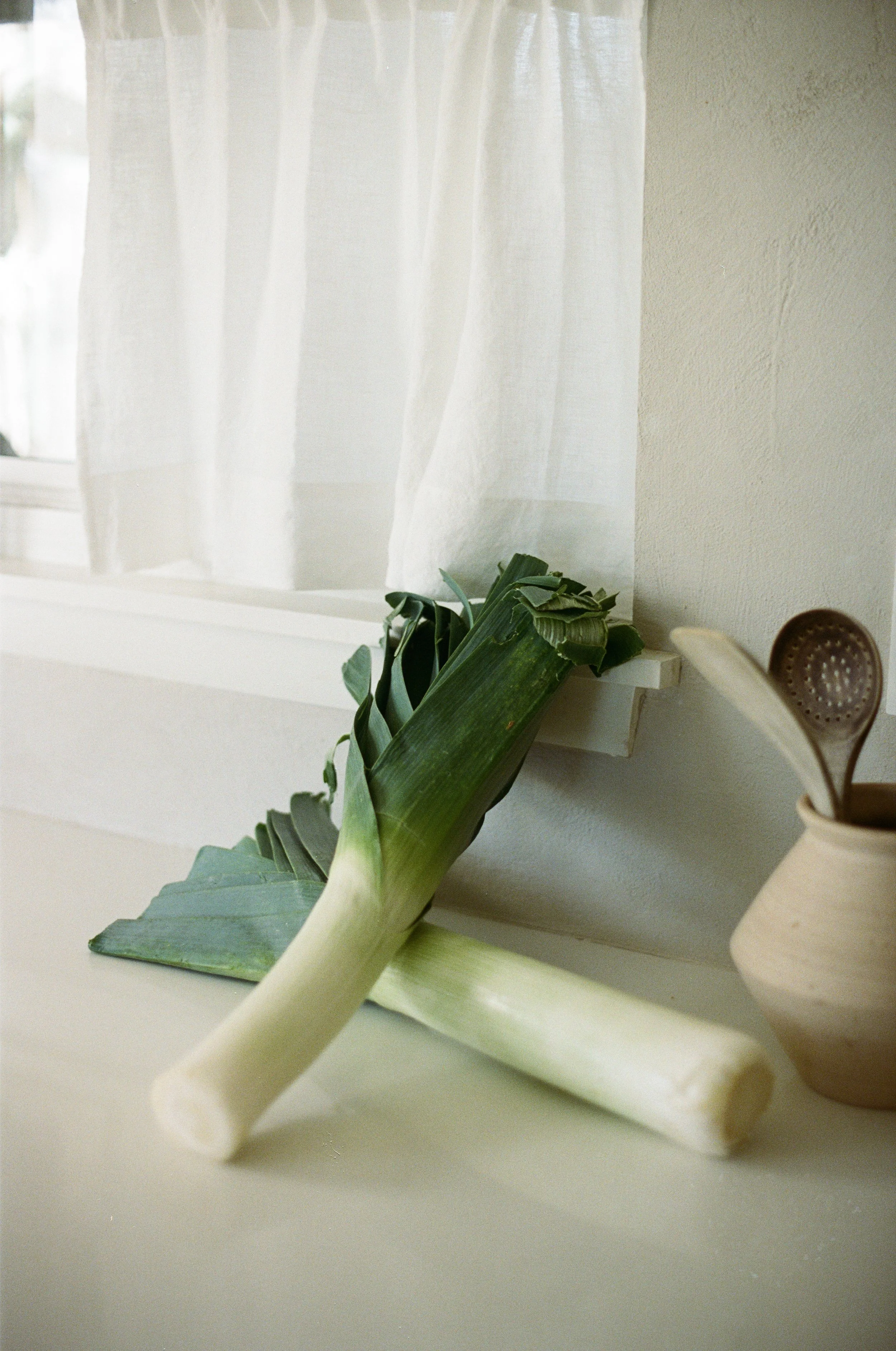
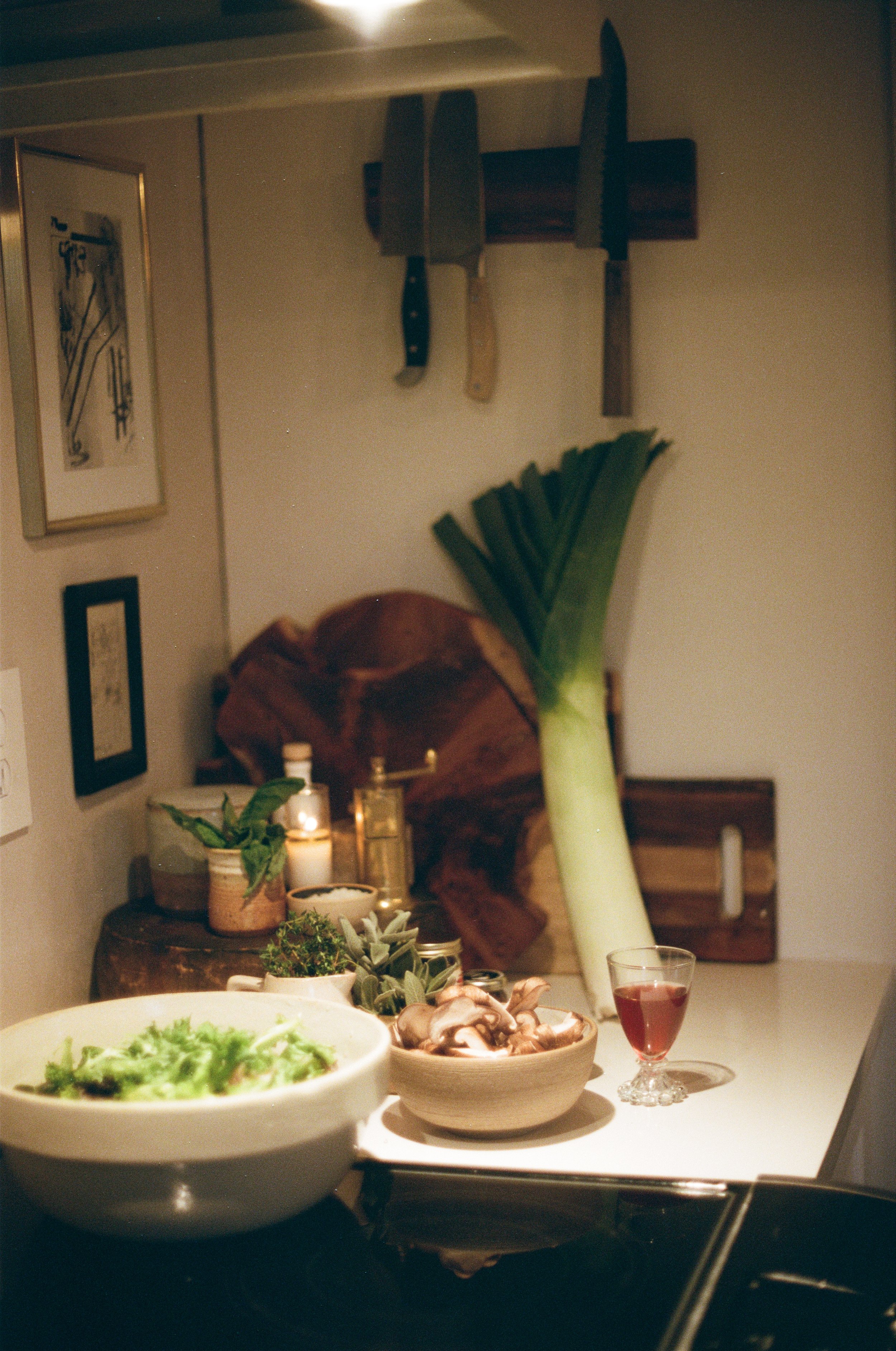
“I found the biggest leeks I’ve ever seen in my life at our natural grocery store. Thick as my wrist.
So naturally, I canceled whatever vague Tuesday dinner plan I had, spent thirteen dollars on two leeks without blinking, and built an entire gourmet menu around them.
That’s honestly the best summary of me I can give you.
Hi, I’m Lauren, I never wrote an introduction because I don’t experience my life in straight lines, and I’ve never trusted neat summaries to tell the truth anyway. Things come to me sideways. Through sensation and repetition. Through watching how people move through rooms and noticing what they reach for when they think no one’s paying attention.
I kept waiting for the day when I could distill myself into one clean sentence. You know, the kind people nod at and say, "Oh, that makes sense."
That day never came.
What did show up were patterns. The same ones, over and over again. Food. Design. Gathering. Atmosphere. The quiet power of making people feel known..”
Read the rest on SUBSTACK.
THE MENU
Charred Radicchio & Winter Citrus Salad with Shaved Fennel, Toasted Pistachio, Champagne Vinaigrette
White Wine–Braised Leeks with Lemon Zest
Gorgonzola Truffle Cream and Wild Mushrooms
Cast-Iron Steak with Thyme and Brown Butter
Charred Radicchio & Winter Citrus Salad with Shaved Fennel, Toasted Pistachio, Champagne Vinaigrette
2 heads radicchio, halved through the core
2 tablespoons olive oil
Flaky salt and freshly cracked black pepper
1 large fennel bulb, very thinly shaved (reserve fronds)
2–3 winter citrus fruits (blood orange, cara cara, or navel), peeled and sliced into rounds or segments
½ cup shelled pistachios, lightly toasted and roughly chopped
¼ cup fennel fronds or fresh herbs (parsley or mint work well)
A few shavings of aged pecorino or parmigiano reggiano
Champagne Vinaigrette
3 tablespoons champagne vinegar
1 teaspoon Dijon mustard
1 teaspoon honey
1 small shallot, very finely minced
¼ teaspoon flaky salt
Fresh cracked black pepper
½ cup good olive oil
Whisk the champagne vinegar, Dijon, honey, minced shallot, salt, and pepper together in a small bowl. Slowly stream in the olive oil while whisking until emulsified. Taste and adjust with more salt or a touch more honey if needed.
Heat a cast iron skillet, grill pan, or outdoor grill over medium-high heat until very hot.
Brush the cut sides of the radicchio halves with olive oil and season generously with salt and pepper. Place them cut-side down on the hot surface and cook for 3–4 minutes, until the leaves are lightly charred and just beginning to soften. Flip and cook another minute on the other side. You want color and a bit of smoke, not total collapse.
Remove from the heat and let cool slightly, then tear the radicchio into large rustic pieces.
Arrange the charred radicchio on a large platter. Scatter the shaved fennel over the top, letting some of the fronds fall naturally through the salad. Nestle the citrus slices throughout so their juices mingle with the leaves.
Drizzle several spoonfuls of the champagne vinaigrette over the salad, letting it pool lightly on the plate. Finish with toasted pistachios, fennel fronds, and, if using, a few delicate shavings of aged cheese.
Season once more with flaky salt and a crack of black pepper just before serving.
White Wine–Braised Leeks with Lemon Zest, Olive Oil
2 large leeks
3 tablespoons good olive oil, plus more for finishing
2 garlic cloves, thinly sliced
¾ cup dry white wine
½ cup vegetable stock or water
½ teaspoon flaky salt, plus more to taste
Fresh cracked black pepper
Zest of 1 lemon
Optional finishes:
A small handful fennel fronds or flat-leaf parsley
A few shavings of pecorino or parmigiano reggiano
Trim the leeks, discarding the dark green tops. Slice the white and pale green portions lengthwise, then cut into 2–3 inch lengths. Rinse thoroughly under cold water to remove any sand hidden between the layers.
Warm the olive oil in a wide sauté pan or shallow Dutch oven over medium heat. Arrange the leeks cut-side down in the pan and cook undisturbed for about 5–6 minutes, until the surfaces begin to develop a light golden color. Turn them gently and add the sliced garlic. Season with the salt and several turns of black pepper.
Pour in the white wine and let it bubble for a minute, allowing the alcohol to cook off slightly. Add the vegetable stock or water, then lower the heat to a gentle simmer.
Cover partially and braise for about 15–18 minutes, turning the leeks once or twice, until they are completely tender and silky. The liquid should reduce to a light, glossy sauce that coats the vegetables.
Remove from heat and drizzle with another tablespoon of olive oil. Scatter the lemon zest over the top, letting its oils release into the warmth of the dish.
Finish with parsley and, if you like, a few delicate shavings of aged cheese before serving.
Gorgonzola Truffle Cream and Wild Mushrooms
2 tablespoons olive oil or butter
¼ cup mushrooms, thinly sliced (cremini or wild mushrooms work beautifully)
¼ cup milk or cream
¼ cup gorgonzola cheese, crumbled
1 tablespoon white truffle oil
¼ teaspoon ground sage, or 1 teaspoon finely chopped fresh sage
¼ teaspoon ground oregano, or 1 teaspoon finely chopped fresh oregano
¼ teaspoon ground thyme, or 1 teaspoon finely chopped fresh thyme
Salt and freshly cracked black pepper, to taste
Zest of ½ lemon
Freshly grated parmesan cheese, for finishing
8 ounces cooked pasta (tagliatelle, gnocchi, or rigatoni work especially well)
Warm the olive oil or butter in a wide saucepan over medium-low heat.
Add the sliced mushrooms and sauté slowly, allowing them to soften and release their moisture. After about 4–5 minutes, when the mushrooms begin to turn golden at the edges, season lightly with salt and black pepper.
Pour in the milk or cream and reduce the heat slightly. Add the crumbled gorgonzola and stir gently as it melts into the cream, forming a smooth, velvety sauce.
Remove the pan from the heat and stir in the truffle oil, sage, oregano, and thyme. Taste and adjust the seasoning with additional salt and pepper if needed.
If you’d like the sauce slightly thicker, stir in another small handful of gorgonzola or a spoonful of grated parmesan until the texture becomes lush and glossy.
Add the cooked pasta directly into the pan and toss gently so the sauce coats every strand or piece evenly.
Finish with lemon zest and a generous shower of grated parmesan just before serving.
Cast-Iron Steak with Thyme, Black Pepper, and Brown Butter
1 large steak, about 1½–2 inches thick
(ribeye, New York strip, or filet)
Kosher salt
Freshly cracked black pepper
1 tablespoon neutral high-heat oil
(grapeseed, avocado, or light olive oil)
3 tablespoons unsalted butter
3–4 sprigs fresh thyme
2 garlic cloves, lightly crushed
Flaky salt, for finishing
Remove the steak from the refrigerator about 45 minutes before cooking. Letting the meat lose its chill ensures an even cook and a better crust.
Pat the steak very dry with paper towels. Moisture is the enemy of a proper sear.
Season generously on all sides with kosher salt and freshly cracked black pepper. Do this about 15 minutes before cooking so the salt begins to dissolve into the surface.
Place a cast iron skillet over medium-high heat and allow it to heat for several minutes until it is deeply hot. Cast iron should be hot enough that a drop of water instantly sizzles and disappears.
Add the neutral oil and swirl to coat the pan. Place the steak in the skillet and do not move it. Let it sear undisturbed for about 3–4 minutes, until a deep brown crust forms. If it sticks, it isn’t ready yet. When the crust develops, it will release naturally.
Flip the steak and sear the second side for 2–3 minutes. Reduce the heat to medium and add the butter, thyme, and crushed garlic to the pan. As the butter melts, tilt the skillet slightly and begin basting the steak continuously with a spoon, letting the foaming butter wash over the meat.
Continue basting for 1–2 minutes, allowing the butter to brown slightly and the thyme to perfume the steak. For medium-rare, cook until the internal temperature reaches 125–128°F. For medium, aim for 135°F.
Transfer the steak to a cutting board and spoon the browned butter and herbs over the top. Let the steak rest at least 8 minutes before slicing. This allows the juices to redistribute and keeps the meat tender. Slice against the grain and finish with flaky salt and a final crack of black pepper.
Spoon any remaining brown butter from the pan over the slices.
A glass of Syrah, Cabernet Franc, or a structured Italian red completes the moment.